By 2026, applicant tracking systems use semantic search, NLP, and machine learning to evaluate candidates rather than simple keyword matching. Cloud-based ATS platforms now update their scoring models continuously, meaning a resume that passed last year may score differently today. Candidates who understand these shifts, including skills-based filtering and AI-ranked candidate lists, have a measurable advantage over those using advice written before 2023.
Cutting-edge ATS Advancements in 2026
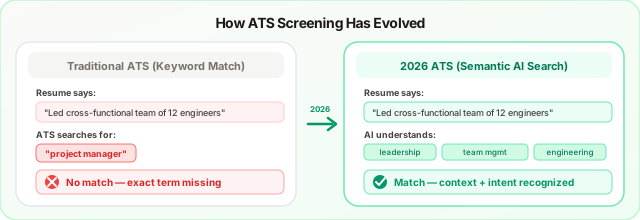
By 2026, applicant tracking systems have dramatically transformed the way resumes are screened and evaluated. Modern ATS technologies employ sophisticated AI algorithms and machine learning to enhance the accuracy and efficiency of the screening process. The integration of natural language processing (NLP) tools allows these systems to better interpret context, synonyms, and varied terminology in resumes, addressing the problem of keyword stuffing.
Moreover, cloud-based collaboration between HR teams and ATSs has improved, allowing for instantaneous sharing and feedback on candidate applications. This provides a dynamic environment where recruiters can make faster, data-driven hiring decisions.
Technological Highlights
- Semantic Search Capabilities: New ATS platforms use semantic search to understand the intent behind the language used, enabling more nuanced and precise matching of candidates to job descriptions.
- Predictive Analytics: By analyzing historical data, ATS can forecast job market trends, suggesting skill sets that are becoming critical and those that may soon be obsolete.
- Enhanced Integration: Seamless linking with major job boards and professional networks (e.g., LinkedIn) streamlines resume importation, reducing errors and increasing compatibility.
Cloud-based ATS platforms now update their scoring models continuously based on recruiter behavior and market signals. A resume that scored well against a specific role last year may score differently today against the same role title, because the underlying model has learned from thousands of hiring decisions made since then. This is why static resumes submitted to multiple applications without updating progressively underperform against tailored submissions.
Impact of AI-Driven Tools on Resume Screening
The integration of AI into ATS has revolutionized the resume screening process. AI algorithms can now evaluate applications not only for keyword presence but also for sentence structure and context. This improvement means that resumes can be assessed more holistically, promoting a fairer opportunity landscape for applicants.
AI Screening Attributes
- Contextual Analysis: AI systems can determine if a candidate genuinely possesses a skill or qualification by evaluating the context in which it appears rather than merely its keyword frequency.
- Bias Mitigation: Advanced AI learns to recognize and eliminate historical biases in hiring patterns, ensuring a more diverse and equitable hiring process.
- Dynamic Scoring Systems: Scores are updated in real-time as AI learns from recruiter behavior and external market pressures.
Leveraging Real-Time ATS Feedback Tools
Tools like ResumeForge are pivotal in 2026, offering real-time, interactive feedback to applicants. These tools integrate seamlessly with ATS platforms to provide instant insights into how a resume might be perceived by an ATS.
Benefits of Real-Time Feedback
- Immediate Adjustments: Receive instant suggestions to adjust wording, format, or keyword usage to align with the specific job description.
- Tailored Optimization: Tools analyze the job description and applicant demographics to suggest personalized improvements, increasing the likelihood of passing the initial ATS screening.
- Comprehensive Analysis: Feedback includes an assessment of visual elements to ensure the resume is both ATS-friendly and visually appealing to human recruiters.
The Role of AI Resume Chatbots
AI resume chatbots have become invaluable in 2026, assisting candidates in enhancing their profiles. These chatbots utilize AI to offer a conversational interface, guiding applicants through resume improvements by understanding their unique background and career goals.
How AI Chatbots Enhance Resumes
- Interactive Refinement: Through conversation, chatbots can help refine sentences, suggest relevant skills, and reorganize sections for better clarity.
- Candidate Profiling: By analyzing an individual’s career data, chatbots provide insights into marketable skills and opportunities for upskilling.
- Efficiency: Automation of repetitive editing tasks allows candidates to focus on strategic improvements.
Strategies for Optimizing Resumes to Meet New ATS Criteria
Adapting your resume for the latest ATS technology in 2026 requires a strategic approach, combining traditional best practices with new insights from AI developments.
Key Optimization Techniques
- Use of Synonyms and Variations: Since modern ATS can understand synonyms and context, diversify your language to include synonymous terms that reflect your skills and experiences.
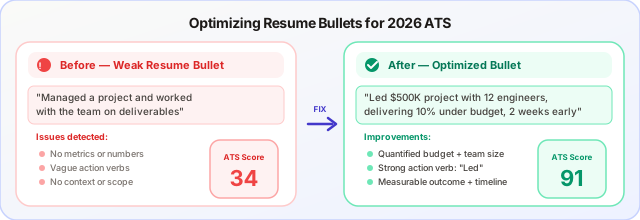
- Emphasize Achievements Using Data: Quantifying achievements remains crucial. Use numbers and statistics to demonstrate impact, such as “increased sales by 20%” or “led a team of 10.”
- Balanced Formatting: Ensure your resume’s format is easily parsable by ATS. Avoid overly complex designs that may interfere with text extraction. Opt for standard headings and bullet points.
- Before/After Example:
- Before: “Managed a project”
- After: “Orchestrated a $500K project, delivering results 10% under budget and two weeks ahead of schedule.”
Key takeaways
✓ Semantic search changes keyword strategy — modern ATS platforms evaluate context and intent, not just keyword presence; contextual evidence matters more than repetition
✓ Scoring models update continuously — cloud-based ATS learns from recruiter decisions, so a resume optimized once loses advantage over time without periodic updates for each role
✓ Context proves claims — AI contextual analysis checks whether your stated skills appear with real supporting examples; a skill listed without any relevant bullet point will score lower than one with context
✓ Quantified achievements score better — numbers give ATS and human reviewers both the signal and the specificity they need; “increased sales by 20%” works where “managed a project” does not
In closing, your resume must be a dynamic document that evolves with technological advancements. By embracing tools designed for real-time feedback and leveraging AI insights, such as those offered by ATS CV Checker, job seekers can maintain competitiveness in the ever-evolving job market. Our tool provides practical assessments to ensure your resume not only passes ATS checks but also stands out to recruiters.